
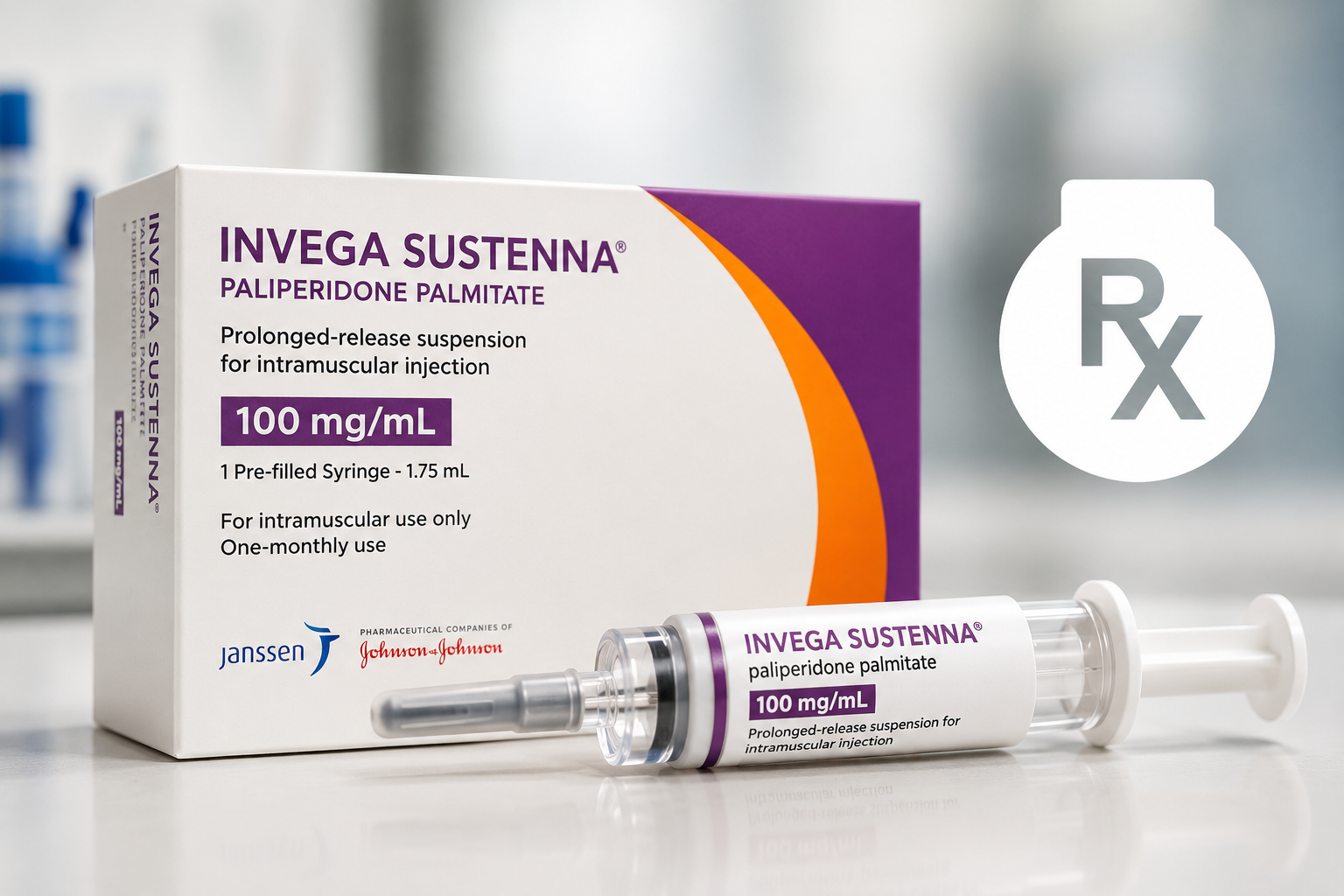
Janssen Pharmaceutica NV v Juno Pharmaceuticals Pty Ltd [2025] FCA 1538, considered an application to the Federal Court for an interlocutory injunction restraining generic manufacturer Juno Pharmaceuticals Pty Ltd (Juno), part of the DBG Group, from launching generic paliperidone palmitate products pending the determination of patent infringement proceedings commenced by patentee Janssen Pharmaceutica NV and its Australian affiliate Janssen-Cilag Pty Ltd (Janssen).
The decision provides a useful reminder of the principles governing interlocutory injunctions in pharmaceutical patent disputes. It also contains interesting observations regarding indirect infringement of method of treatment claims where the alleged infringer supplies pharmaceutical products together with prescribing instructions.
Janssen’s Australian Patent No. AU200834010 included claims directed to dosage regimens for administering paliperidone palmitate long-acting injectable formulations for the treatment of schizophrenia.
Juno obtained ARTG registrations for generic one-monthly paliperidone palmitate products (PALJUNA MONTHLY and VALINO MONTHLY) and intended to seek PBS listing and launch those products in Australia.
Janssen sought an interlocutory injunction restraining the launch pending trial, alleging infringement of method of treatment, dosage regimen and Swiss-style claims.
Juno denied infringement and foreshadowed a cross-claim alleging, amongst other things, that the asserted claims lacked an inventive step.
Justice Burley adopted the principles recently summarised by Justice Rofe in Regeneron Pharmaceuticals Inc v Sandoz Pty Ltd [2025] FCA 1067.
The Court reiterated that an applicant for an interlocutory injunction must establish:
• a prima facie case, meaning a sufficient likelihood of success to justify preservation of the status quo; and
• that the balance of convenience favours the grant of relief.
Importantly, the Court emphasised that the apparent strength of both the infringement case and any invalidity challenge forms part of the overall assessment. A sufficiently strong invalidity case may diminish, or even negate, the strength of the applicant's prima facie case for infringement.
Janssen alleged infringement of claims directed to a specific dosing regimen for treating schizophrenia.
A significant aspect of the infringement case concerned Juno's product information (PI).
Janssen argued that by providing instructions to prescribing mental health practitioners in the form of product information (PI) for PALJUNA MONTHLY and VALINO MONTHLY, Juno threatened either to authorise or participate as a joint tortfeasor in the infringement of the claim.
For VALINO, Juno effectively accepted that if doctors follow the PI they will perform the patented method, so it does not dispute indirect infringement under section 117 of the Patents Act. Instead, it argued that there are enough non-infringing uses to avoid infringement.
For PALJUNA, Juno first argued that it cannot be liable for the whole patented regimen because it’s PI specified use in relation to maintenance and not the initial loading doses, for which the PI directed clinicians to administer Janssen's INVEGA SUSTENNA.
The Court considered there to be a strong prima facie case that, by supplying PALJUNA MONTHLY together with these prescribing instructions, Juno was threatening to facilitate, procure or persuade infringement of the claimed method.
The Court similarly considered there to be a strong prima facie case of indirect infringement under section 117 of the Patents Act.
Interestingly, the Court regarded the infringement case concerning the Swiss-style claims as weaker than that concerning the method of treatment and dosage regimen claims.
Juno argued that many patients would not receive treatment falling within the claimed dosage regimen because:
• clinicians sometimes depart from the recommended dosing schedule;
• some patients fail to comply with treatment; and
• the product information contemplates several dosing scenarios outside the scope of the claims.
The Court accepted that these represented genuine non-infringing uses.
However, on the evidence before it, those uses appeared likely to comprise only a relatively small, albeit non-trivial, proportion of patients. The Court was therefore satisfied that the vast majority of uses would fall within the scope of the asserted claims.
Juno also challenged the validity of the relevant claims of the patent for lack of inventive step based upon the common general knowledge together with published literature and earlier clinical trials.
Justice Burley accepted that Juno had established at least an arguable or prima facie case of invalidity.
However, the Court was not persuaded, at the interlocutory stage, that the invalidity arguments were sufficiently strong to materially diminish Janssen's strong prima facie infringement case.
The balance of convenience arguments reflected the commercial realities of PBS-listed pharmaceutical products.
Janssen argued that allowing Juno’s generic entry before trial would likely result in irreversible price reductions, loss of market share and long-term commercial consequences extending beyond the products directly at issue.
Juno, on the other hand, emphasised the importance of preserving its first-mover advantage as the first generic entrant.
The Court accepted that both parties faced a degree of commercial prejudice.
Nevertheless, considering all of the relevant factors together, the Court concluded that Janssen had established a strong prima facie case of infringement, which was not materially diminished by Juno's arguable invalidity challenge. Although the Court accepted that damages would likely be more difficult to assess if the injunction were wrongly granted than if it were refused and infringement were ultimately established, the balance of convenience nevertheless favoured preserving the status quo. Accordingly, the interlocutory injunction was granted.
The decision illustrates several important principles relevant to pharmaceutical patent litigation:
• A respondent's invalidity challenge will not necessarily prevent an interlocutory injunction merely because it is arguable. The Court will closely assess the comparative strength of both parties' substantive cases.
• Product information supplied with pharmaceutical products may play a critical role in establishing indirect infringement where prescribing instructions encourage performance of a patented method of treatment.
• Evidence regarding prescribing practices and the prevalence of non-infringing uses may be important, but relatively fewer instances of non-infringing use may not prevent the Court from finding a strong prima facie case.
• In pharmaceutical disputes, the commercial consequences of PBS listing, irreversible price reductions and generic market entry continue to be significant factors when assessing the balance of convenience.
The decision demonstrates that, where a patentee can establish a strong prima facie infringement case and the respondent's validity challenge is not sufficiently compelling to undermine it, the Federal Court remains prepared to preserve the status quo by restraining generic entry pending trial.
If you would like further information about this decision, or interlocutory injunctions in Australian patent litigation more generally, please contact Daniel McKinley or Catrina Olivera.

We are proud members of


Office
Level 1/98 Riley Street
East Sydney NSW 2010
Australia
GPO Box 683
Sydney NSW 2001
Australia
Contact
